
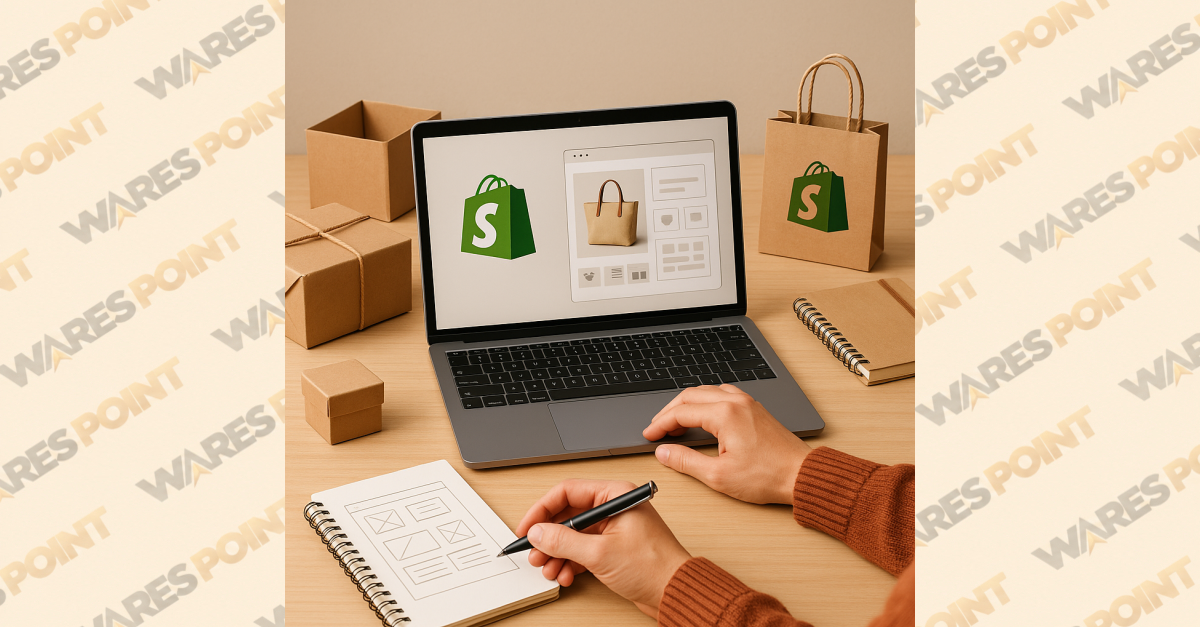

When you sell products online, your website has a bigger job than looking polished. It has to help people find the right item, understand what they’re buying, place an order, pay, and know what happens next. Behind the scenes, you need to keep products, inventory, orders, shipping, and customer questions from becoming a jumble of separate tasks.
That’s why the platform you choose matters. For an ecommerce business, the website is part of the operation—not just a digital brochure. Shopify is worth serious consideration because it brings many of the core parts of running an online store into one place. Related resource: Learn about the importance of selecting the right tools for your business from day one.
A store and its daily work, together
Shopify gives a business a hosted storefront, product catalog, checkout, and tools to manage orders. You can start with your own online shop and connect other ways of selling as your business develops, including social platforms, online marketplaces, and in-person sales. Products and orders from connected channels can be managed through Shopify’s admin, with specific features depending on the channel and plan.
That can save a new business owner from stitching together a website, shopping cart, payment system, and a stack of separate tools before making the first sale. It also gives you a central place to check what’s happening as orders come in.
If you later sell at a market, pop-up, or physical store, Shopify can connect those in-person sales with your online operation. Inventory and orders can be synced across the channels you use. If you only sell online today, you can begin there and add other channels when they make sense.
The practical advantage is room to grow without having to rebuild the whole business website as soon as your way of selling changes.
A smoother path from product page to purchase
Customers don’t see your platform’s settings. They see the product, the price, the shipping details, and the steps it takes to buy. If important information is hard to find or checkout feels confusing, they may leave before placing an order.
Shopify connects its checkout with your products, shipping, discounts, and inventory. That gives you a foundation for a buying process that is consistent with the rest of the store. You can put your effort into making product pages clear, answering the questions customers actually have, and setting expectations about delivery and returns.
No platform can promise that visitors will buy. A strong store still depends on the product, the price, the customer’s trust, and how well you explain the offer. But when the basic commerce pieces work together, you have less technical assembly to manage and more time to improve the parts customers experience.
AI help where the work happens
Shopify’s AI assistant, Sidekick, is built into the store admin. It can provide guidance, help with tasks, analyze store information, and generate content such as product descriptions and blog posts. Shopify also offers AI features for creating images and working with store themes. Its suggestions need to be reviewed before you use them, just like any other draft.
For someone starting from a blank store, that help can make the first steps less intimidating. You can ask for a starting point for a product description, get help understanding an admin task, or explore ways to arrange a page. Then you can revise the result so it accurately describes the product and sounds like your business.
The quality of the output depends on the information you provide. Details such as materials, dimensions, intended use, and the kind of customer you serve give AI something concrete to work with. It can help you write and organize; it can’t verify claims, choose the right products, or replace your judgment. Related resource: Discover how AI can improve your business workflow.
Begin small and add tools with a reason
A common mistake when starting a store is trying to build the fully grown version before knowing what customers want. You don’t need a huge catalog, a complicated design, or a dozen apps to test an idea.
Start with a small selection of products, accurate descriptions, clear shipping and return information, and a storefront that works well on a phone. Ask someone unfamiliar with the business to find an item and try to reach checkout. Their questions can show you what needs to be clearer.
Shopify also has analytics and an app ecosystem for businesses that need more specialized features. Those options can help as the store grows, but they may add costs and complexity. Check the current plan details, payment fees, and any app charges before committing, and add features when they solve a real problem.
Why I’d put Shopify near the top of the list
I’ve been building websites since the late 1990s, and I enjoy working through the technical side. Wares Point runs on Drupal, which gives me a high level of control—but that control also means more decisions, setup, and maintenance.
For an ecommerce business, I wouldn’t assume that building more of the underlying system yourself is automatically the best use of your time. If the main purpose of the website is to sell products, a platform designed around commerce deserves a close look. Shopify brings the storefront, checkout, orders, and connected selling tools together, while its AI can help with some routine writing and setup work.
You still have to decide what to sell, who it’s for, how to price it, and how to reach potential customers. Shopify won’t make those choices for you. What it can do is give you a working foundation for the online store, so more of your effort can go into the offer and the customer experience instead of assembling the machinery behind each sale.
That’s the case for Shopify: it doesn’t remove the work of running a business, but it can make the ecommerce part easier to manage. If selling online is central to your business, Shopify is one of the first platforms I’d consider. Related resource: Explore effective strategies for building a sustainable online business.
Get Shopify!
Affiliate disclosure: Wares Point may earn a commission if you sign up for a service discussed in this article, at no additional cost to you.